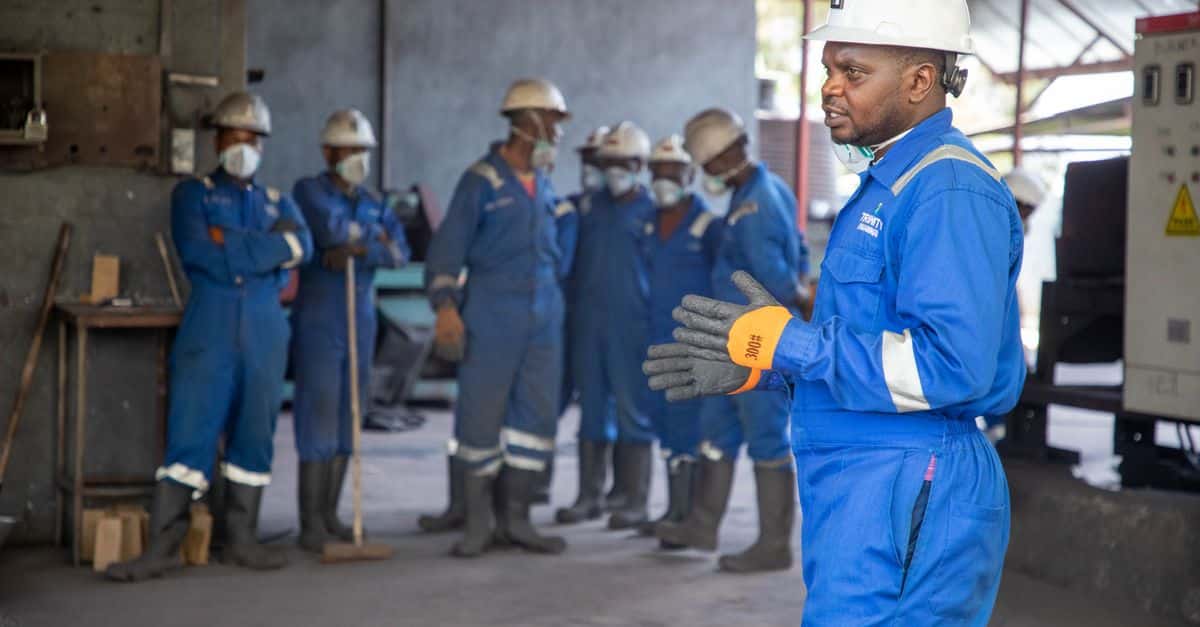
A manufacturing plant brings in forty workers from Brazil or Angola to launch a new production line. The health and safety training is ready in English, but half the team struggles with technical terms and emergency procedures. If an accident happens and the training was never properly understood, legal responsibility falls on the employer, not on the worker who missed the instruction.
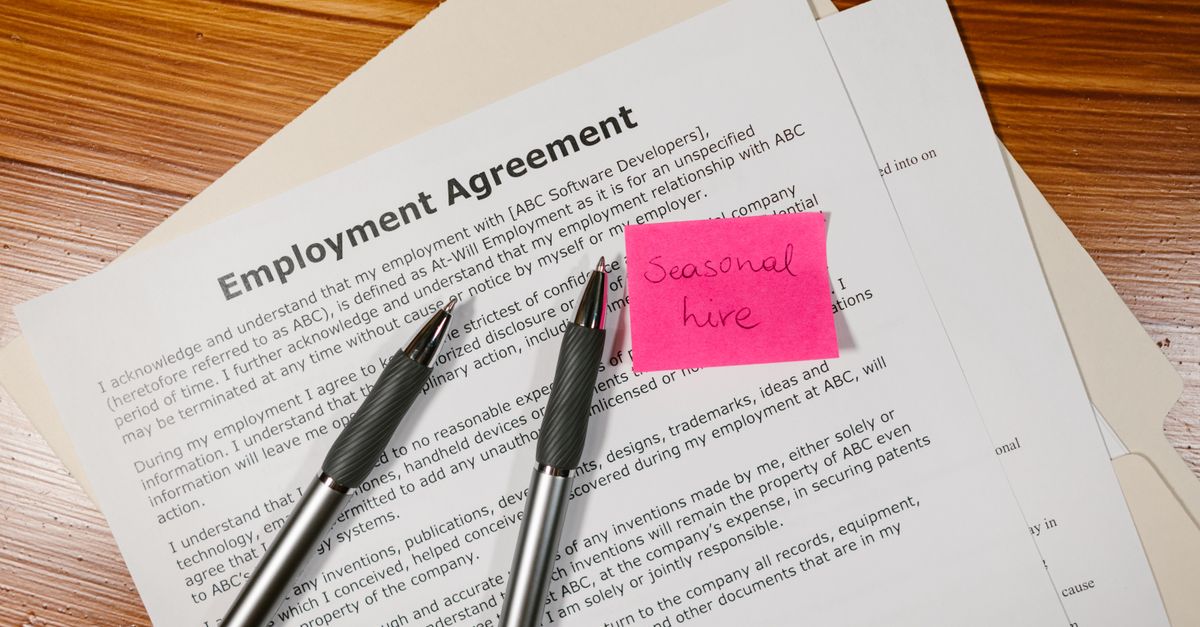
Translating manuals, presentations and safety data sheets for health and safety training is not a generic linguistic task. It is a document that, during a labour inspection or after a workplace accident, proves the company met its legal duty to inform and train its staff.
Why generic translation fails in this context
Machine translation without specialist review produces errors that look harmless but are not. "Lockout/tagout" translated literally loses the operational meaning of the equipment isolation procedure. "Confined space" badly rendered can be confused with a simple storage room instead of a location with asphyxiation risk.
Health and safety terminology has to stay consistent across every material: trainee manual, trainer's presentation, signage, safety data sheets (SDS) for the chemicals in use, and emergency procedures. If the term for "personal protective equipment" changes between the manual and the poster on the factory floor, the foreign team loses confidence in the material, and worse, in the instruction itself.
The most requested language pairs for this type of project are:
- English to Portuguese and Portuguese to English, for teams split between UK operations and Portuguese-speaking sites
- Portuguese to languages spoken by migrant workers on construction and industrial sites, such as Romanian, Ukrainian or Nepali
- Brazilian Portuguese to European Portuguese, and the reverse, when teams move between Brazil and Portugal
- English to French, Spanish or German, for multinational crews on shared sites
What UK and Portuguese regulations require in practice
Under the Health and Safety at Work etc. Act 1974 and the associated Management of Health and Safety at Work Regulations, employers must provide information and training that workers can actually understand. A manual handed out in a language the worker cannot read with confidence does not satisfy that duty.
In Portugal, Law 102/2009 sets the same principle: training and information must suit the characteristics of each worker, including the language they understand. After a workplace accident, the Health and Safety Executive or, in Portugal, the Autoridade para as Condições do Trabalho (ACT), can ask for proof that training was delivered in a form the worker could follow. A signed, dated training record paired with the translated material is the evidence that protects the company in an investigation or legal claim.
This matters just as much for companies sending crews to work on projects in Angola or Mozambique, where the duty to train local staff in a language they understand follows the same logic, even if the legal framework differs by country.
Choosing the right service tier for this material
Not every piece of safety training content needs the same treatment. The decision depends on the risk tied to the content and its legal exposure.
- Emergency procedure manuals, safety data sheets and instructions for high-risk equipment call for the Estratégica tier, with a translator, reviewer and QA reviewer working under an ISO 17100 audited process and a dedicated project manager. This is the right level when a translation error could mean a serious accident or a regulatory penalty.
- Recurring training materials and internal procedures without critical risk attached can run through the Standard tier, where a qualified linguist works from M21Global's own machine translation engine with full post-editing, following ISO 18587.
- Large reference archives, such as historical records of training already delivered, suit the IAH+ tier, with selective human review on the segments most prone to error.
Full formatting (DTP) is included across all three tiers, which matters here because so much of this material depends on layout: safety pictograms, mandatory PPE tables, evacuation route diagrams. Translating the text without keeping the visual structure creates confusion exactly where clarity matters most.
Preparing the project to cut risk and turnaround
Before requesting a quote, gather final materials rather than drafts. Text that changes after translation has started creates avoidable delays and cost. Provide a glossary, if one already exists, with approved industry-specific terms from chemicals, construction or logistics. Flag which files include graphic elements, such as signage or diagrams, and which are plain text procedures, since this affects the workflow.
Where the training carries legal certification, such as working-at-height or confined-space courses, confirm with the company's health and safety officer which final document, certificate, attendance record or assessment test, also needs translating, not just the teaching material.
M21Global has worked for over 20 years with companies operating between Portugal, Angola, Mozambique, Brazil and European markets, holding ISO 17100:2015 and ISO 18587 certification audited by Bureau Veritas. The team knows the terminology of health and safety training, SDS documents and operational procedures, with direct experience in translating contracts for the Angolan market and company registration documentation in Angola, where training local teams is often part of the same internationalisation project. Check the business translation services page and request a quote for your health and safety training materials: a response within three business hours.
Related Services
Request a free internationalisation quote
- Request a free internationalisation quote
- Certified Translation Company Registration Angola Iape
- Translating Contracts Angolan Market
- A Translation Company Speeds Up The Internationalisation Of Your Business
Frequently Asked Questions
Is translating health and safety training a legal requirement?
Both UK and Portuguese law require that safety training be understandable to the worker receiving it. Providing material only in a language the worker does not understand does not satisfy that duty.
What health and safety documents usually need translation for foreign teams?
Training manuals, safety data sheets (SDS), emergency procedures, signage, training attendance records, and completion certificates are the most common.
Which service tier is right for safety data sheets?
High-risk content such as SDS and emergency procedures should use the Estratégica tier, which includes review by a second linguist and an ISO 17100 audited workflow.
Is the original formatting, like pictograms and tables, kept in the translation?
Yes. Full formatting (DTP) is included in all three of M21Global's service tiers, which preserves safety pictograms, diagrams and tables exactly as in the source file.
How long does it take to translate a health and safety manual?
Turnaround depends on volume, language pair and technical complexity. M21Global sends a quote with a defined delivery schedule within three business hours of the request.